

Key Takeaways
- Dirac sits between design and production, reading a 3D model from the assembly side and returning a physically feasible build sequence a manufacturing engineer then optimizes.
- It generates 3D animated work instructions from the model rather than photographs and CAD screenshots. Brakenwagen puts the authoring effort at 5 to 10 percent of the usual.
- A 2025 controlled experiment comparing digital with paper instructions found assembly time down about 45 percent and errors down from 56 to 9. A separate study of animated CAD instructions measured 16.4 percent less assembly time and 62.5 percent fewer errors.
- Brakenwagen reports 20 percent more throughput at existing plants and new plants spinning up 50 to 70 percent faster.
- The urgency comes from lead times. Standard large power transformers average roughly 128 weeks from order to delivery, and switchgear has stretched past 60 weeks.
AI process planning is an unglamorous category with a specific job: deciding how a thing gets built, after the engineer has decided what it is and before anyone on the line is asked to build it. It is work that has historically lived in a manufacturing engineer’s head, a spreadsheet, and a folder of screenshots that went stale the first time the design changed.
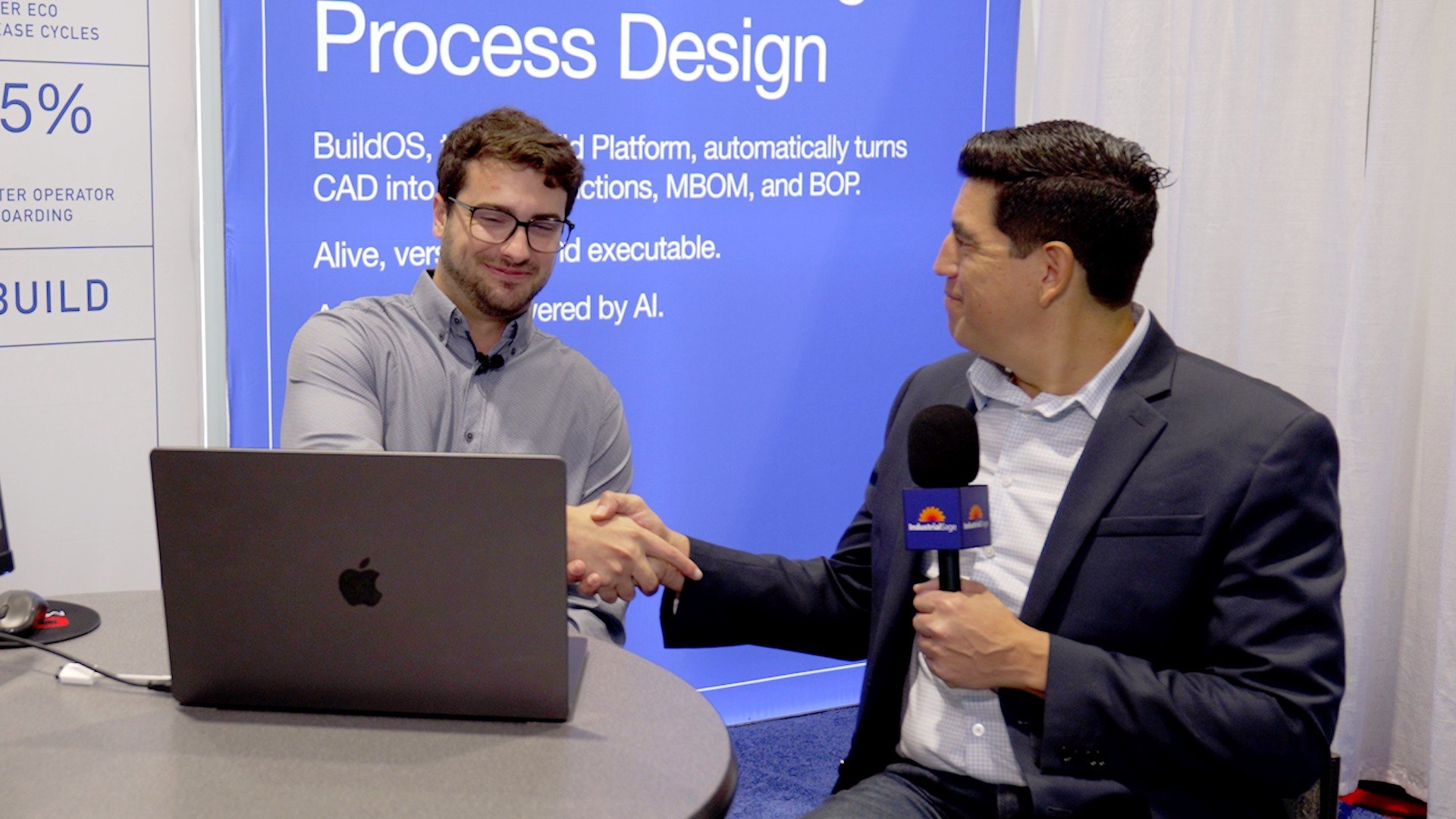
IndustrialSage sat down with Ben Brakenwagen, Director of Sales for Industrials at Dirac, on the show floor at IMTS 2026. Watch the full interview here.
What Sits Between Design and the Line
Brakenwagen locates the product precisely, which is more than most software companies manage in one sentence.
“We do AI process planning. We sit typically with the manufacturing engineer or an industrial engineer, so it’s post-design but pre-production. We take 3D data and translate it ready for the floor, so you can move all of our data right to the assembly line and get things built faster, quicker, and more effectively.”
The demonstration was a pump, and the distinction he draws is the one that matters.
“This is what a mechanical engineer would design in a 3D CAD tool. But what our tool does is it looks at it from the assembly perspective. So we’re actually going to see how this machine can get put together, and our system will go through and basically give you a first pass about a physically feasible way to put the system together. And then as a manufacturing engineer, I can optimize that process before it gets sent to the line.”
A CAD model describes a finished object. It does not describe the order in which hands and tools can reach the fasteners, which is a different problem and the one that determines whether the assembly is buildable at rate. “Physically feasible” is doing real work in that sentence. The system is reasoning about access and sequence, not just exploding the model.
Instructions That Move
The second half of the product is the output that reaches the operator, and Brakenwagen is blunt about the state of the art it is replacing.
“Most work instructions are kind of a hodgepodge of pictures of people actually putting the things together or screenshots of 3D models. So we’ve taken a fundamentally different approach, and we’ve gone 3D model into interactive instruction, so it’s actually a 3D animated instruction. It’s basically like taking an IKEA instruction and injecting it with steroids and adrenaline.”
The research on this is better than you might expect for such a mundane-sounding intervention. A 2025 controlled experiment in mechanical assembly compared paper instructions against digital ones and measured average assembly time falling roughly 45 percent, from about 1,085 seconds to 599, with total errors dropping from 56 to 9. The authors are appropriately careful about sample size and controlled conditions, so read it as direction rather than as a coefficient.
Closer to what Dirac actually produces, a 2025 study specifically on animated CAD-derived instructions measured a 16.4 percent reduction in assembly time and 62.5 percent fewer errors. The smaller time saving and the large error saving together are the honest shape of this: animation does not mainly make people faster, it makes them wrong less often.
On authoring effort, Brakenwagen’s own number is the one to quote.
“This is functionally a work instruction that you could share with your operators, and so it’s done in about 5 to 10 percent of the time.”
That matters most where designs change. In engineered-to-order work, a design revision cascades through the engineering bill of materials, the manufacturing bill of materials and the bill of process before it reaches the instructions on the floor, which is the last link in the chain and routinely the one left out of sync. Cutting authoring to a tenth is what makes keeping up with revisions realistic rather than aspirational.
Why the Data Center Buildout Cannot Keep Up
Asked where demand concentrates, Brakenwagen does not hedge.
“Right now the data center build-out is getting energy, cooling, energy management. All of those domains right now cannot keep up. Everything is completely engineered to order.”
The supply data supports him emphatically. Standard large power transformers now average around 128 weeks from order to delivery, with substation transformers reported beyond 160 weeks in 2026, up from roughly 140 in 2023. Switchgear has stretched past 60 weeks from about 44 weeks in late 2025, and high-voltage circuit breakers have run to roughly 125 weeks against 77 in 2023.
Two things follow. First, this equipment is not built on a separate line for data centers; the same factories serve utilities and industrial buyers, so the queue is shared. Second, and this is the part that makes process planning relevant rather than merely interesting, these are engineered-to-order products. Every unit is somewhat bespoke, which means every unit carries its own process planning burden, which means the conventional fix of running the line faster does not apply. You cannot amortize the planning across a long identical run when there is no long identical run.
It is the same structural problem we found in standing up engine production from scratch, and the same demand wave now reshaping who builds data center infrastructure.
Copy and Paste Your Factory, Not Your People
Which brings the conversation to its best line, and the one that explains why a planning tool gets framed as a capacity tool.
“If you want to ramp up production in whatever domain, this is an amazing tool for you. Because we’re going to standardize your work, you can now copy and paste your factory as opposed to copy and pasting people, and it just allows 20 percent more throughput at your existing factories, and then net new factories are going to spin up 50 to 70 percent faster.”
The phrase is doing something precise. The traditional way to replicate a working plant is to move the people who know how it works, because the knowledge of how to build the product is resident in them. That caps expansion at the rate you can train and relocate experienced staff, which in the current labor market is close to zero.
Standardizing the process into a form that transfers, an animated instruction generated from the model rather than a tribal account of how the last plant did it, is what makes the plant itself the replicable unit. Brakenwagen’s throughput and ramp figures are company numbers, and the mechanism behind them is straightforward enough to evaluate: less time authoring, fewer errors at the station, and a new site that starts from a working process instead of discovering one.
More from the show floor: the full From the Floor series from IMTS 2026.
About Dirac
Dirac is a New York based software company founded in 2023 that builds AI process planning tools, turning 3D design data into assembly sequences, bills of materials and 3D animated work instructions. Its platform has been adopted for work instruction authoring in defense manufacturing, and it is backed by Founders Fund and Coatue. Learn more at diracinc.com.
Frequently Asked Questions
What is AI process planning?
AI process planning is the step between design and production. Software reads the 3D model from an assembly perspective and proposes a physically feasible order of operations, which a manufacturing or industrial engineer then refines before the job reaches the line. It answers how a product gets built, not what it is.
How is that different from CAD?
A CAD model describes the finished object. It does not describe whether hands and tools can reach each fastener in a given order, which determines whether the design is buildable at rate. Process planning reasons about access and sequence rather than geometry alone.
Do animated work instructions actually reduce errors?
The measured evidence says yes, mostly on quality rather than speed. A 2025 study of animated CAD-derived instructions found 16.4 percent less assembly time and 62.5 percent fewer errors. A separate controlled experiment comparing digital against paper instructions saw errors fall from 56 to 9 and assembly time drop about 45 percent.
Why does engineered-to-order production make planning harder?
Because every unit is somewhat bespoke, so the planning effort cannot be amortized across a long identical production run. A design change also cascades through the engineering BOM, manufacturing BOM and bill of process before reaching the floor instructions, which are routinely the last thing updated and the most often out of sync.
What are current lead times for data center electrical equipment?
Standard large power transformers average roughly 128 weeks from order to delivery, with substation units reported beyond 160 weeks in 2026. Switchgear has stretched past 60 weeks from about 44 in late 2025, and high-voltage circuit breakers to around 125 weeks. Data centers share these factories with utilities and industrial buyers.
What does copy and paste your factory mean?
Ben Brakenwagen of Dirac uses it to contrast two ways of replicating a plant. The traditional route moves experienced people, because the knowledge of how to build the product lives in them, which caps expansion at the rate you can train and relocate staff. Standardizing the process into transferable instructions makes the plant itself the replicable unit.

Author: Wes Garrett
Content and Growth Marketing Producer | From Strategy to Execution, Delivering Impactful Media Solutions and Client Success


