

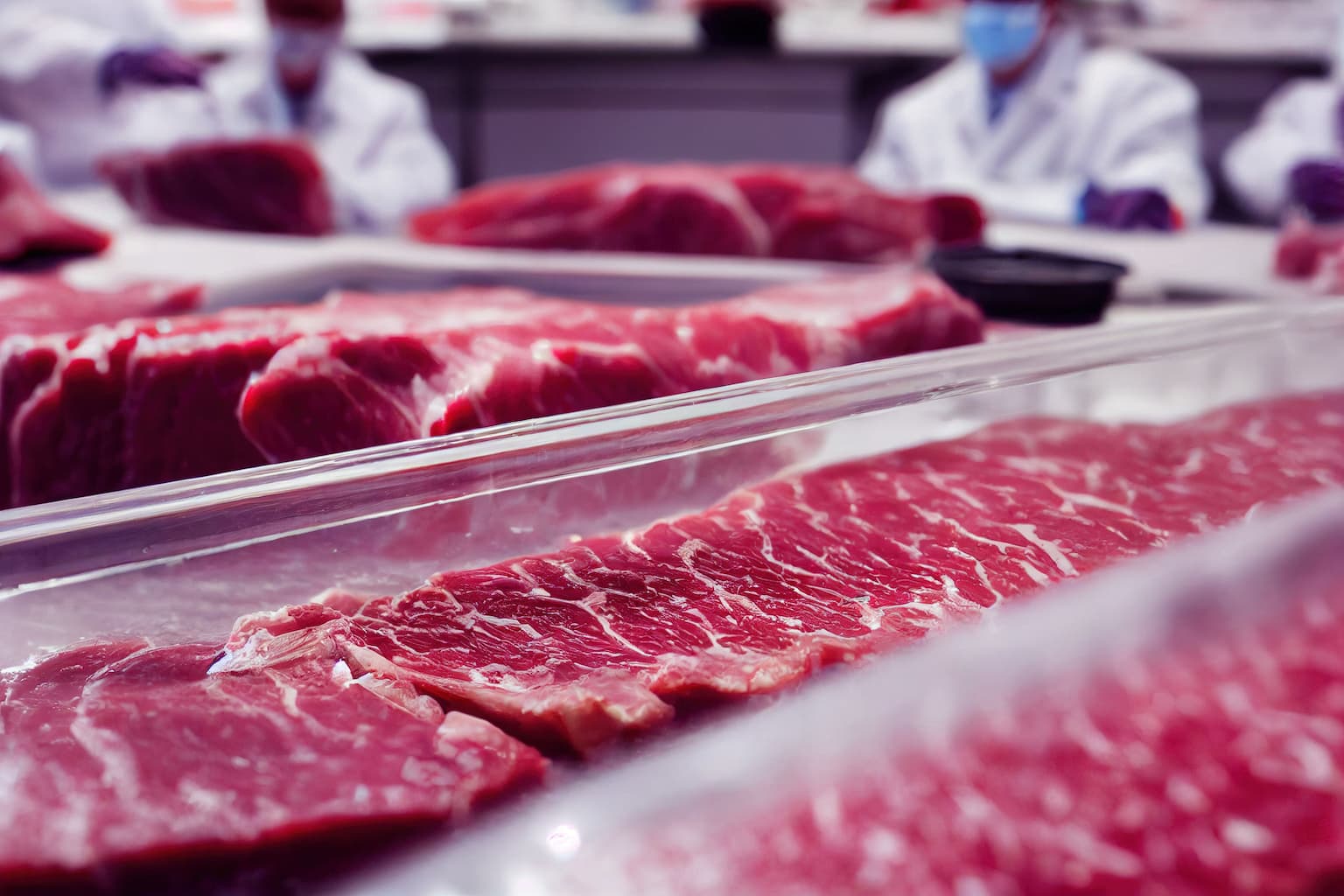
The intuitive read on Tyson Foods closing two beef plants is that the company ran out of cattle. That is half right, and the missing half is the part manufacturers should care about. The United States has too much beef packing capacity for the herd it has, and the resulting margin collapse is what actually closes plants.
Packers Are Losing Roughly $250 on Every Animal
Beef packer margins have run deeply negative through 2026, reaching about negative $253 per head, with the year’s range spanning roughly negative $50 to negative $300. Those are not thin margins. They are sustained losses on every animal moving through the plant.
Tyson’s own numbers show the scale. Analysts at Stephens Inc. project segment operating losses of $600 million to $650 million for the company’s beef business in fiscal 2026. Additionally, they estimate the closures will return $100 million to $150 million in annual cost savings. Closing capacity, in other words, is the profitable move.
Why a Shortage Produces Excess Capacity
A packing plant has a fixed daily throughput and a largely fixed cost base. The Joslin, Illinois facility Tyson is closing could harvest roughly 3,000 head a day. When the national herd shrinks, every plant bids for a smaller pool of animals, which pushes cattle prices up while beef prices lag behind. Margin gets squeezed from both directions at once.
Then the arithmetic turns against the older plants specifically. Running a facility at partial capacity spreads fixed costs across fewer animals, so cost per head rises exactly when margin per head is already negative. Accordingly, the plants that close are rarely the newest ones.
Tyson had already permanently shut a large beef plant in Lexington, Nebraska, which could harvest 4,500 cattle a day. The company also cut its Amarillo operation from about 5,500 head a day to 2,800 and is pursuing a sale of its Pasco, Washington plant. Read together, that is a multi-year capacity reduction rather than a single announcement.
| Facility | Daily capacity | Status |
|---|---|---|
| Joslin, Illinois | ~3,000 head | Closing, 2,598 workers affected |
| Eagle Mountain, Utah | Case-ready | Closing, 723 workers affected |
| Lexington, Nebraska | ~4,500 head | Previously closed permanently |
| Amarillo, Texas | 5,500 reduced to 2,800 head | Throughput cut |
| Pasco, Washington | Beef processing | Sale being pursued |
New Efficient Capacity Made It Worse
The squeeze is not only about the herd. As Drovers reported in its analysis of the packing capacity squeeze, a wave of new and highly efficient cow-slaughter capacity came online in recent years. Specifically, that includes the Wright City plant run by American Foods Group in Missouri and the CS Beef Packers plant in Kuna, Idaho. Those facilities pull animals away from older plants that cannot match them on cost per head.
This is a familiar pattern in any capital-intensive industry. New capacity gets built against a demand forecast, the forecast turns, and the marginal producer absorbs the difference. Notably, the marginal producer here is a decades-old plant with a large workforce and a regional supply base attached to it.
The Herd Math Behind It
Cattle inventory fell to 86.2 million head in January, down from nearly 95 million at the 2019 cyclical peak and the smallest herd since 1951. For longer perspective, the all-time peak was roughly 132 million head in 1975, though the industry has restructured so thoroughly since then that the modern comparison is 2019.
The cause traces to 2022. Drought caught 75 percent of the beef cow herd that fall, grain costs were climbing simultaneously, and ranchers culled 13.3 percent of the national herd, the highest rate on record. Many of the animals sold were breeding females, which is why the effect persists years later.
Recovery carries a counterintuitive cost. Every heifer a rancher retains for breeding is a heifer that does not go to slaughter, so beginning the rebuild tightens near-term supply further. A retained heifer takes roughly three years to put beef on a shelf. She calves at about 24 months, and that calf needs another 18 to 22 months to finish. Consequently, USDA analysts do not expect the herd to expand before 2028.
Why Heavier Cattle Do Not Rescue a Kill Floor
Carcass weights are at records, with average dressed weight reaching 902 pounds in March. The effect on output is real: fed cattle slaughter ran 8.6 percent below year-ago levels through June while fed beef production fell only 5.4 percent.
That gap explains why grocery shelves look better than the herd numbers suggest, and it also explains why it does not save the plants. A packing line is engineered around head per hour, not pounds per hour. Heavier animals produce more beef per head without filling a single additional slot on the shift schedule. Therefore, the throughput problem the plant was built around stays exactly where it was.
The Transferable Lesson
Strip out the cattle and this is a capacity utilization story that applies to any manufacturer with heavy fixed assets. Input scarcity does not present as an empty warehouse. It presents as rising input costs, falling utilization, negative unit margins, and eventually a decision about which plant absorbs the reduction.
The distinguishing feature here is that no amount of capital shortens the cycle. A supplier can be paid to expand a stamping line or a switchgear plant. Nobody can be paid to make a heifer mature faster. Consequently, biological inputs sit in a different risk category than the equipment lead times tracked in our US Manufacturing Investment Tracker.
Frequently Asked Questions
Why is beef packing capacity closing during a cattle shortage?
Because the shortage destroys packer margins. A smaller herd means plants bid against each other for fewer animals, which raises cattle costs while beef prices lag. Packers have been losing roughly $250 per head, so removing capacity is the profitable response.
How much are beef packers losing per head in 2026?
Margins have reached about negative $253 per head, within a 2026 range of roughly negative $50 to negative $300. Tyson’s beef segment is projected to lose $600 million to $650 million in fiscal 2026.
How big were the Tyson plants that closed?
The Joslin, Illinois beef facility could harvest roughly 3,000 head per day and employed 2,598 of the affected workers. The Eagle Mountain, Utah case-ready plant accounted for 723. Tyson previously closed a Lexington, Nebraska plant with about 4,500 head per day of capacity.
How small is the US cattle herd right now?
Cattle inventory fell to 86.2 million head in January, the smallest since 1951 and down from nearly 95 million at the 2019 cyclical peak. The all-time peak was roughly 132 million head in 1975.
Why does record carcass weight not offset the plant closures?
A packing line is engineered around head per hour rather than pounds per hour. Heavier animals raise beef output per head, which is why production fell only 5.4 percent while slaughter fell 8.6 percent, but they do not fill additional slots on a shift.
When will beef packing capacity and cattle supply come back into balance?
USDA analysts do not expect the herd to expand before 2028, because a retained heifer takes roughly three years to produce finished beef. Industry observers expect further plant closures among older facilities in the meantime.
The Bottom Line
Industry observers expect at least one more older plant to go, and with no herd growth forecast before 2028, the regions attached to those payrolls have a long wait. For the full episode context see IndustrialSage Headlines Ep. 32, our coverage of Louisiana aerospace manufacturing, or more manufacturing and industrial news.

Author: Wes Garrett
Content and Growth Marketing Producer | From Strategy to Execution, Delivering Impactful Media Solutions and Client Success


