

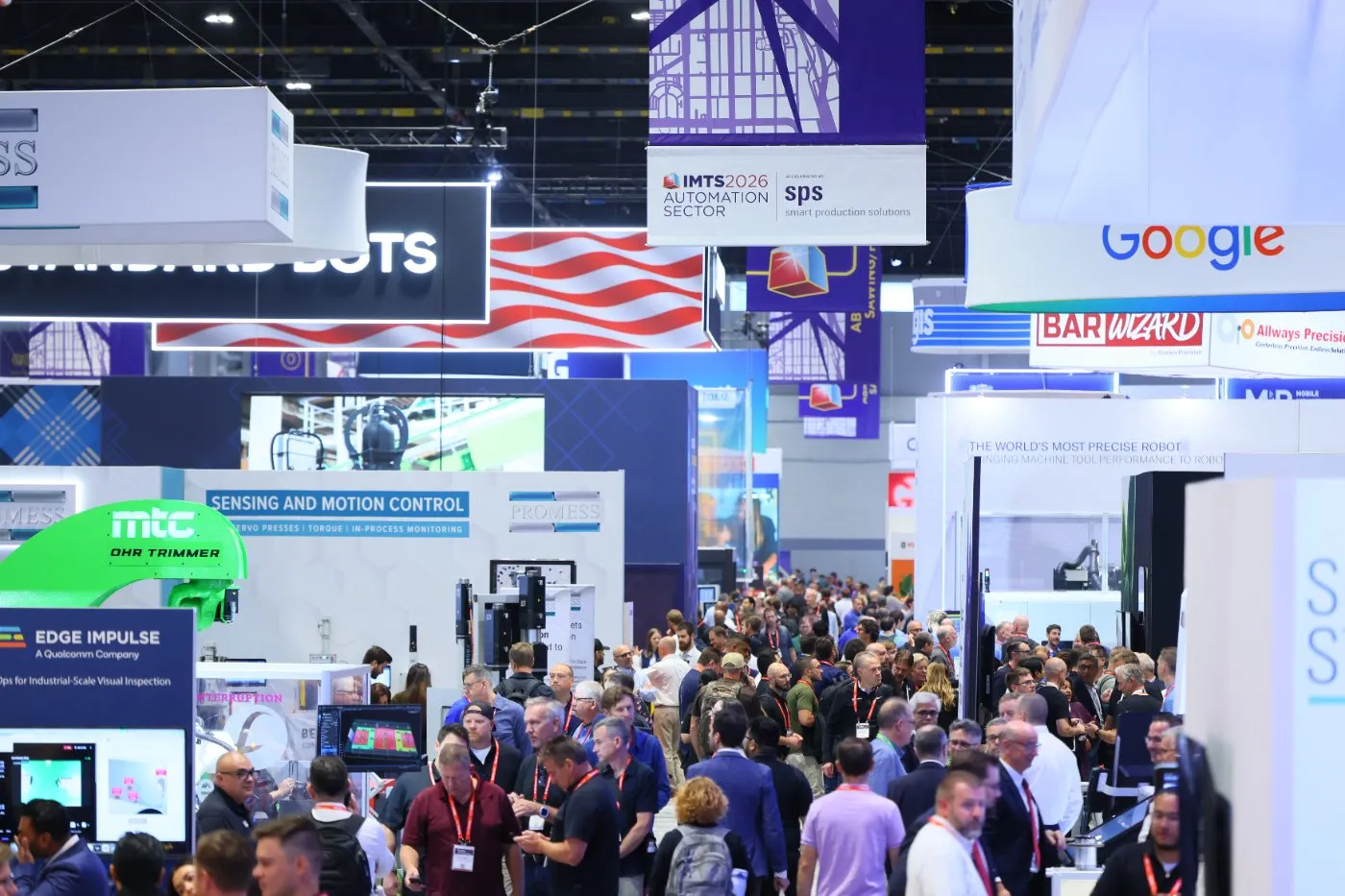
Every trade show produces optimism. The question is whether the order book agrees. This year it does, because machine tool orders are running 37.1 percent ahead of last year. Moreover, the pattern inside that number explains what exhibitors at IMTS 2026 were describing on the floor.
What the July USMTO Report Actually Says
The U.S. Manufacturing Technology Orders report is the cleanest read on capital equipment demand, because it counts signed orders rather than sentiment. July orders totaled $605.8 million. That figure fell 8.0 percent from June, but it rose 55.2 percent against July 2025.
| Measure | Figure |
|---|---|
| July 2026 orders | $605.8 million |
| Change vs. June 2026 | Down 8.0 percent |
| Change vs. July 2025 | Up 55.2 percent |
| Year to date, January through July | $4.03 billion |
| Year to date change | Up 37.1 percent |
| Units ordered, year to date | Up 13.0 percent |
Year to date, manufacturers have ordered $4.03 billion of equipment, 37.1 percent more than the same period in 2025. In addition, July marked five consecutive months above $500 million, which has happened only twice in the 28-year history of the series.
The Number That Matters Is the Gap Between Value and Units
Here is the detail most coverage skips. Order value climbed 37.1 percent year to date, but the number of machines ordered rose only 13.0 percent. Consequently, the average machine leaving a builder’s factory is substantially more expensive than it was a year ago.
That gap is not inflation. AMT attributes it to “sustained growth in demand for additional automation.” In practice, that means buyers are specifying pallet pools, robotic load and unload, in-process probing, and tool management on machines that would otherwise have shipped bare.
For anyone reading machine tool orders as a demand signal, this changes the interpretation. A shop buying one heavily automated cell instead of three manual machines is not expanding headcount proportionally. In other words, the capital is arriving in a form built to run with less direct labor per spindle.
Where the Orders Are Going
The sector detail is equally revealing. Electrical equipment manufacturers hit their year-to-date peak for 2026, which tracks directly with grid expansion and data center construction. We covered that same bottleneck from the supply side in our look at switchgear lead times.
By contrast, manufacturers of engines, turbines, and other power transmission equipment reduced their investment. Notably, contract machine shops held nearly flat, with orders down just 1.3 percent month to month while machine units rose 2 percent. Job shops buy when they can see committed work ahead of them, so a flat month at this level is a stronger signal than it looks.
What IMTS 2026 Added to the Picture
IMTS 2026 ran September 14th through 19th at McCormick Place across 1.17 million square feet. Organizers reported final attendance of 91,295 registrants from 123 countries, with 1,788 companies exhibiting. We spent the week talking with exhibitors, attendees and officials.
The consistent message from machine builders was that quotes are landing for equipment destined for facilities that do not exist yet. That is a different signal than replacement demand, and it lines up with the order data rather than contradicting it. Furthermore, the Bureau of Economic Analysis reported new foreign direct investment of $232.2 billion in 2025, up 49.5 percent. Of that, manufacturing accounted for $121.8 billion, or 52.5 percent.
Artificial intelligence also moved from the booth demo to the control panel. For example, the show floor featured tools that let people without coding backgrounds program a robotic work cell. That matters far more for a 40-person shop than for a tier one supplier.
The Constraint Has Moved From Capital to Labor
Put the three signals together and a sequence appears. Capital is available, orders are being signed, and the equipment being specified is deliberately automation heavy. Meanwhile, the workforce gap remains the binding constraint, and it was the topic exhibitors raised most often without prompting.
That ordering matters for planning. If machine tool orders were merely a sentiment rally, the right response would be to wait. Because they are signed orders skewed toward automation, the right response is to solve for the people who will run the cells. You can follow where the capital is actually landing in our U.S. Manufacturing Investment Tracker.
Frequently Asked Questions
What are machine tool orders?
Machine tool orders measure signed purchase commitments for metalworking production equipment in the United States, published monthly by AMT as the U.S. Manufacturing Technology Orders report. Because they count orders rather than shipments or opinions, they lead actual factory output.
How much did machine tool orders grow in 2026?
Through July, orders totaled $4.03 billion, up 37.1 percent from the same period in 2025. July alone came in at $605.8 million, which was 55.2 percent above July 2025.
Why did July orders fall from June?
July orders declined 8.0 percent month to month, but the year-over-year comparison rose 55.2 percent. In addition, July was the fifth consecutive month above $500 million, so the monthly dip came off an unusually high base.
Why is order value growing faster than the number of machines?
Value rose 37.1 percent year to date while units rose 13.0 percent, so the average machine is significantly more expensive. AMT attributes the difference to sustained demand for additional automation, meaning buyers are specifying robotics, pallet systems and in-process inspection rather than buying bare machines.
Which industries are ordering the most equipment?
Electrical equipment manufacturers reached their 2026 year-to-date peak, driven by grid expansion and data center construction. By contrast, producers of engines, turbines and power transmission equipment reduced investment, while contract machine shops held roughly flat.
How many people attended IMTS 2026?
Organizers reported final attendance of 91,295 registrants, including 14,447 students, from 123 countries and all 50 states. In addition, 1,788 companies exhibited across 1.17 million square feet at McCormick Place in Chicago from September 14th through 19th.
The Bottom Line
The order book confirms what the show floor claimed, but it also reframes the problem. Manufacturers are not hesitating on capital, and they are buying equipment built to run with less direct labor per machine. Therefore the question for the next four quarters is not whether the investment shows up, but whether the workforce does. For more, see our breakdown of core capital goods orders, our IMTS 2026 preview with AMT’s Kevin Bowers, or the full IndustrialSage Headlines Ep. 33.

Author: Wes Garrett
Content and Growth Marketing Producer | From Strategy to Execution, Delivering Impactful Media Solutions and Client Success


