

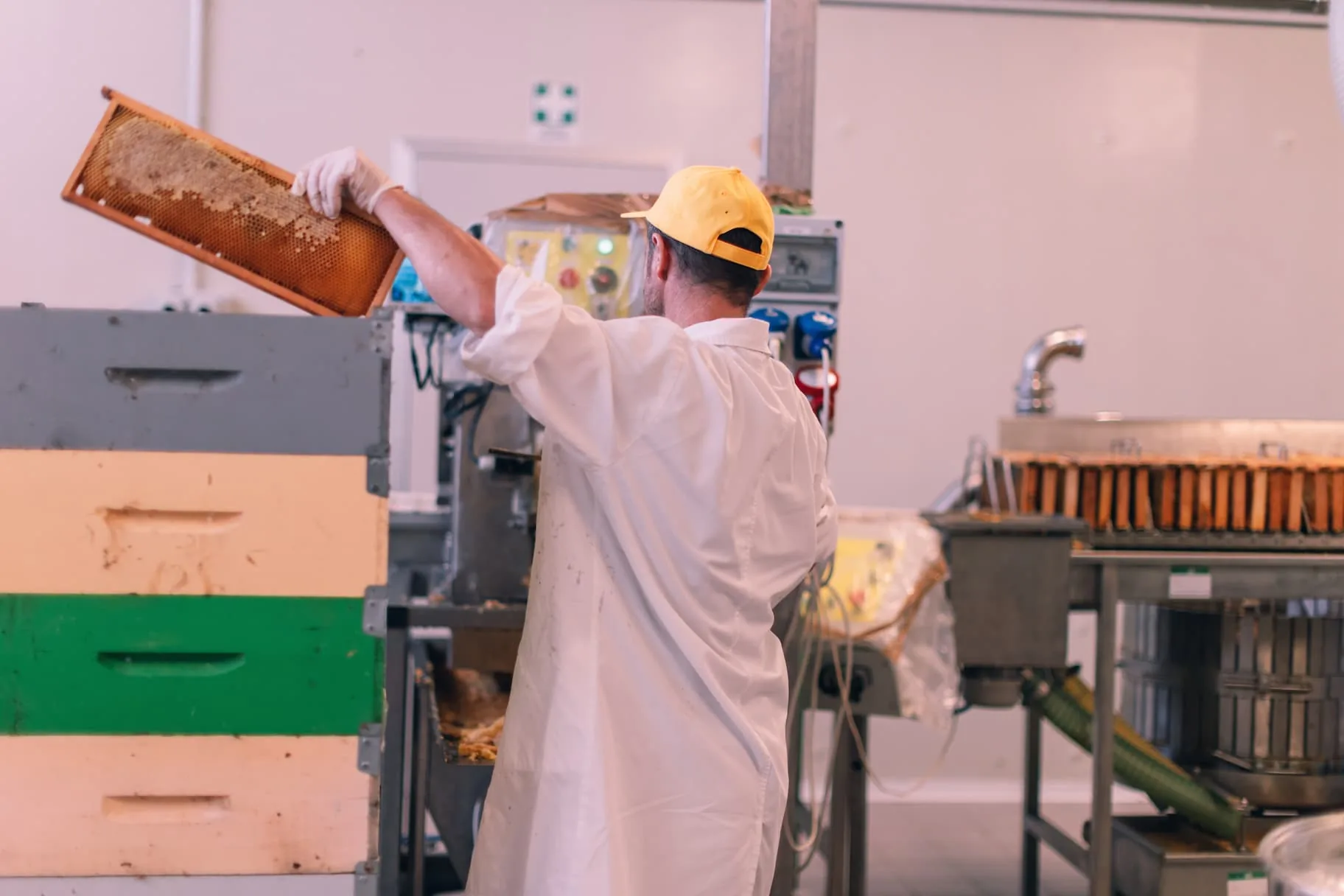
A manufacturing cooperative just approved $130 million for a plant that will add 39 jobs. On a normal corporate hurdle rate that project does not clear. The owners are not normal investors.
Key Takeaways
- Sioux Honey Association broke ground September 22, 2026 on a $130 million, 440,000 square foot plant in Sioux City, Iowa.
- Notably, the facility holds a raw material warehouse, processing equipment and 5 bottling lines, raising capacity 50 percent.
- However, it adds only about 39 permanent positions, which works out to roughly $3.3 million of capital per job.
- Founded in 1921, the co-op is the largest honey cooperative in the United States and has no outside shareholders.
- Specifically, more than 180 American beekeeping families own it and also supply it, which changes the payback period the board will accept.
- In total, USDA counts 1,620 farmer, rancher and fishery cooperatives generating $275.8 billion in revenue.
What a Manufacturing Cooperative Actually Is
A manufacturing cooperative is a processing business owned by the producers who supply its raw material. Members deliver product, the co-op processes and sells it, and the margin returns to members rather than to outside equity.
Generally, that structure is most common in food and agriculture, where the raw input is perishable and growers need a reliable buyer. Land O’Lakes, Ocean Spray, CHS and Dairy Farmers of America all run on it.
The scale is larger than most people assume. USDA’s annual survey counts 1,620 farmer, rancher and fishery cooperatives with $275.8 billion in revenue in 2024. Together they report 1,735,929 memberships and $11 billion in net income before taxes.
The Sioux City Project
Currently, Sioux Honey Association broke ground on September 22 in Sioux City, Iowa. The new facility covers 440,000 square feet against a current plant of 225,000 square feet on Lewis Boulevard.
Specifically, it will house a raw material warehouse, processing equipment and 5 bottling lines, lifting capacity by 50 percent. It also consolidates the co-op’s Anaheim, California operation into Iowa. Phase one finishes in 2027, and the new processing operation should run by the summer of 2028.
Overall, the co-op expects it to be the largest honey bottling plant in the world. Sioux Honey already moves more than 40 million pounds of honey a year, drawn from member beekeepers in more than 30 states.
At the end of the day, all of this will help our co-op thrive for another 100 years and continue supporting U.S.A. beekeepers.
Rob Buhmann, Chairman of the Board, Sioux Honey Association
Why the Capital Math Is Different
Start with the number that looks bad. $130 million divided by 39 jobs is about $3.3 million of capital per position. For comparison, Amazon’s new robotics plant in Greenwood, Indiana runs roughly $333,000 per job, and Lego’s Monterrey expansion runs about $308,000.
| Project | Capital | Jobs | Per job |
|---|---|---|---|
| Lego, Monterrey, Mexico | $400M | 1,300 | $308K |
| Amazon, Greenwood, Indiana | $100M | 300 | $333K |
| U.S. Steel, Fairfield, Alabama | $475M | 250 | $1.9M |
| Sioux Honey, Sioux City, Iowa | $130M | 39 | $3.3M |
However, jobs per dollar is simply the wrong test for a co-op, because the owners are not buying a return on equity. They are buying processing capacity for their own product.
Specifically, consider what each group actually gets. An outside shareholder wants the plant to generate earnings that lift a share price within a holding period. A beekeeper member wants the plant to accept their honey at a fair price for the next 30 years. Consequently, the second owner tolerates a payback period the first one would reject outright.
Furthermore, a co-op member captures value twice: once in the price paid for their delivered product and again in any patronage distribution. In other words, a project that only breaks even at the processing level can still be clearly worth it to the people financing it.
This Is Not an Isolated Case
In fact, co-ops are investing in processing capacity across the food sector. In July 2026, Land O’Lakes announced an expansion of its Tulare, California facility to produce ultra filtered milk and high value dairy protein. The company framed it as unlocking more value from member milk.
Notably, the framing in both announcements is the same. Neither company led with throughput or margin. Both led with what the investment does for the farmer owners who supply it.
What It Means for the Jobs Debate
We have written before about how America is building factories without adding proportional jobs. The co-op structure is a useful case, because it shows that low headcount is not always an automation story.
In this case the driver is consolidation. Sioux Honey is pulling California work into Iowa, so the net national job figure is smaller than the Iowa figure suggests. Meanwhile capacity rises 50 percent on 5 bottling lines, which is a throughput investment rather than a labor one.
Ultimately, read a cooperative announcement as a supply chain commitment rather than an economic development one. The jobs number will usually disappoint. The capacity number is the one the members voted on.
This story runs in IndustrialSage Headlines Ep. 34, alongside the August durable goods report and 3 other capital projects.
Frequently Asked Questions
What is a manufacturing cooperative?
A manufacturing cooperative is a processing business owned by the producers who supply its raw material. Members deliver product and share in the margin, so there are no outside shareholders to satisfy.
How big is the new Sioux Honey plant?
The Sioux City facility covers 440,000 square feet and holds 5 bottling lines, raising capacity by 50 percent. Sioux Honey expects it to be the largest honey bottling plant in the world.
How many jobs does the $130 million project create?
Overall, about 39 permanent positions, which works out to roughly $3.3 million of capital per job. The project also consolidates the co-op’s Anaheim, California operation into Iowa.
Who owns Sioux Honey Association?
More than 180 American beekeeping families own the co-op, which was founded in 1921. It is the largest honey cooperative in the United States and moves more than 40 million pounds of honey a year.
Why do cooperatives accept longer paybacks?
Members are suppliers rather than outside investors, so they value guaranteed processing capacity for decades of their own output. In addition, they capture value twice, once in the price paid for delivered product and again through patronage distributions.
How large is the U.S. agricultural cooperative sector?
USDA counts 1,620 farmer, rancher and fishery cooperatives with $275.8 billion in revenue in 2024. Together they report 1,735,929 memberships and $11 billion in net income before taxes.

Author: Wes Garrett
Content and Growth Marketing Producer | From Strategy to Execution, Delivering Impactful Media Solutions and Client Success


