

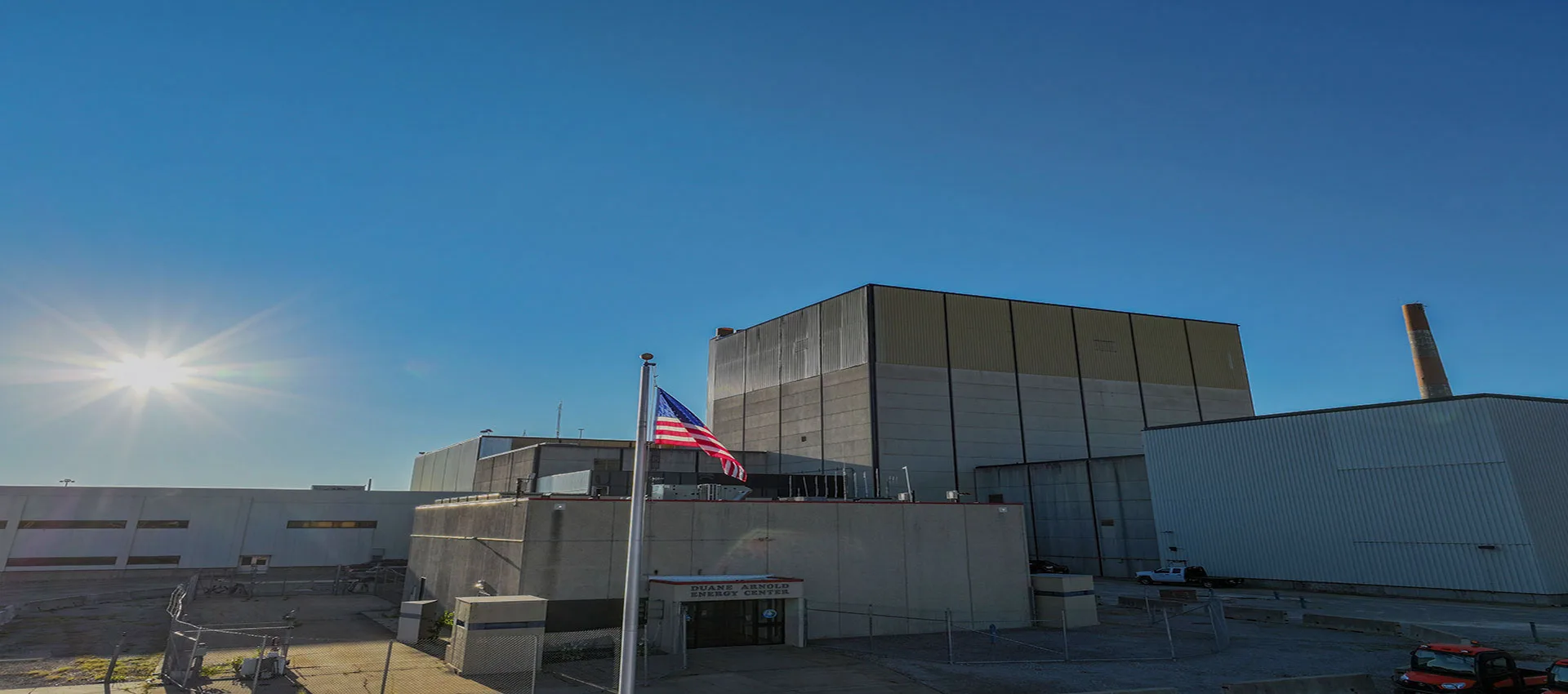
No commercial reactor in the United States had ever come back after its owner began decommissioning. Three are now doing it at once, and every one of them leans on federal financing. The Duane Arnold nuclear plant restart is the third and most recent of them, and it is also close to the end of the list.
What the Energy Department Approved
The Department of Energy closed a loan of up to $1.9 billion to NextEra Energy on September 8th to restart the Duane Arnold Energy Center in Linn County, Iowa. The 615 megawatt unit ceased operations in 2020 after derecho damage. Moreover, the financing comes through the Office of Energy Dominance Financing.
President Trump has set an ambitious course to restore American nuclear leadership, and the restart of Duane Arnold Nuclear Plant in Iowa marks another step in advancing America’s nuclear renaissance.
James P. Danly, Deputy Secretary, U.S. Department of Energy
DOE counts nearly 1,500 construction jobs and more than 450 permanent positions, with the restored unit able to power roughly 500,000 homes. However, the restart still requires Nuclear Regulatory Commission licensing approval before it can run.
The Three Restarts, Side by Side
Duane Arnold is not a standalone project. Instead, it is the third entry in a pattern that formed over about two years.
| Plant | Output | Federal support | Target |
|---|---|---|---|
| Palisades, Michigan (Holtec) | 800 MW class | Loan guarantee up to $1.52 billion | 2026 |
| Crane Clean Energy Center, Pennsylvania (Constellation) | 835 MW | $1 billion DOE loan | 2027 |
| Duane Arnold, Iowa (NextEra) | 615 MW | Loan up to $1.9 billion | Q1 2029 |
Of the three, Palisades is furthest along. It transitioned from decommissioning back to operating status for regulatory purposes in August 2025, and it began loading fuel into the reactor vessel on August 30th, 2026. Consequently it is positioned to become the first U.S. plant to complete the round trip from decommissioning to commercial operation.
Every One of Them Has a Customer First
The financing is the part worth studying. In each case a long term offtake agreement preceded the capital, and in two of the three the counterparty is a hyperscale technology company.
Constellation announced the Crane restart after reaching a 20 year power agreement with Microsoft. That unit, the former Three Mile Island Unit 1, had shut down for economic reasons in 2019. Similarly, NextEra holds a 25 year power purchase agreement with Google for the Duane Arnold output. Reporting puts commercial operation in the first quarter of 2029.
In effect, this inverts the usual order. Historically, a utility built generation against a forecast of regional demand and recovered the cost through rates. Here, a single buyer signs for a quarter century before anyone orders a fuel assembly, which is what makes a retired asset financeable at all. In other words, data center operators are not simply buying power. They are underwriting the capital.
Why the List Is Short
The obvious follow-up question is which plant is next. The answer is that very few candidates remain. Notably, the reason is physical rather than political.
Importantly, decommissioning is a one way process. Once an operator begins cutting up reactor internals, shipping components off site and releasing trained staff, the path back closes. Palisades, Crane and Duane Arnold were all recoverable, because their shutdowns were recent. In each case, decommissioning had not progressed far enough to be irreversible. Plants whose decommissioning is already well advanced do not offer that option, regardless of who wants the power.
In addition, the workforce constraint compounds it. A restart needs licensed operators. Because those qualifications are plant specific, they take years to rebuild. Therefore the restart window for any given plant is measured from its shutdown date, and it closes.
What This Means for Industrial Buyers
Two implications follow for manufacturers planning energy strategy.
First, the restart pipeline is close to exhausted, so it is not a general answer to industrial power demand. It returns roughly 2.2 gigawatts to the grid across three projects. Although that is meaningful regionally, it is small against national load growth.
Second, and more significantly, hyperscale buyers have demonstrated willingness to sign 20 and 25 year agreements to secure firm baseload. However, most industrial buyers do not contract on that horizon. In a market where generation is increasingly built against a specific signature, contract tenor becomes a competitive variable rather than a procurement detail. We looked at a related constraint in our analysis of switchgear lead times.
Frequently Asked Questions
What is the Duane Arnold nuclear plant restart?
The Department of Energy closed a loan of up to $1.9 billion to NextEra Energy on September 8th, 2026 to restart the 615 megawatt Duane Arnold Energy Center in Linn County, Iowa. The plant ceased operations in 2020 after derecho damage, and the restart still requires Nuclear Regulatory Commission licensing.
Who is buying the power from Duane Arnold?
NextEra holds a 25 year power purchase agreement with Google for the plant’s output. Reporting puts commercial operation in the first quarter of 2029.
Which U.S. nuclear plants are being restarted?
Three restarts are underway. Palisades in Michigan targets 2026. The Crane Clean Energy Center in Pennsylvania, formerly Three Mile Island Unit 1, targets 2027 under a 20 year Microsoft agreement. Finally, Duane Arnold in Iowa targets the first quarter of 2029 under a 25 year Google agreement.
Has a U.S. reactor ever restarted after decommissioning began?
No, because no commercial U.S. reactor has previously returned to operation after its owner began decommissioning. Palisades is expected to be the first, having moved from decommissioning to operating status for regulatory purposes in August 2025 and begun loading fuel on August 30th, 2026.
Why can’t more retired nuclear plants be restarted?
Decommissioning is largely irreversible. Once reactor internals are cut up, major components are shipped off site and licensed operators disperse, restoring the plant is no longer practical. Consequently, only recently shut plants whose decommissioning had not progressed far remain candidates.
How many jobs does the Duane Arnold restart create?
The Department of Energy counts nearly 1,500 construction jobs and more than 450 permanent operating positions. In addition, the restored 615 megawatt unit can power roughly 500,000 homes.
The Bottom Line
The Duane Arnold nuclear plant restart is a genuine addition to firm capacity, and it is also a demonstration of who sets terms in the current power market. A retired reactor became financeable because one buyer committed for 25 years. Manufacturers competing for the same electrons should note what that signature was worth. For more, see the full IndustrialSage Headlines Ep. 33 or our manufacturing and industrial news section.

Author: Wes Garrett
Content and Growth Marketing Producer | From Strategy to Execution, Delivering Impactful Media Solutions and Client Success


