

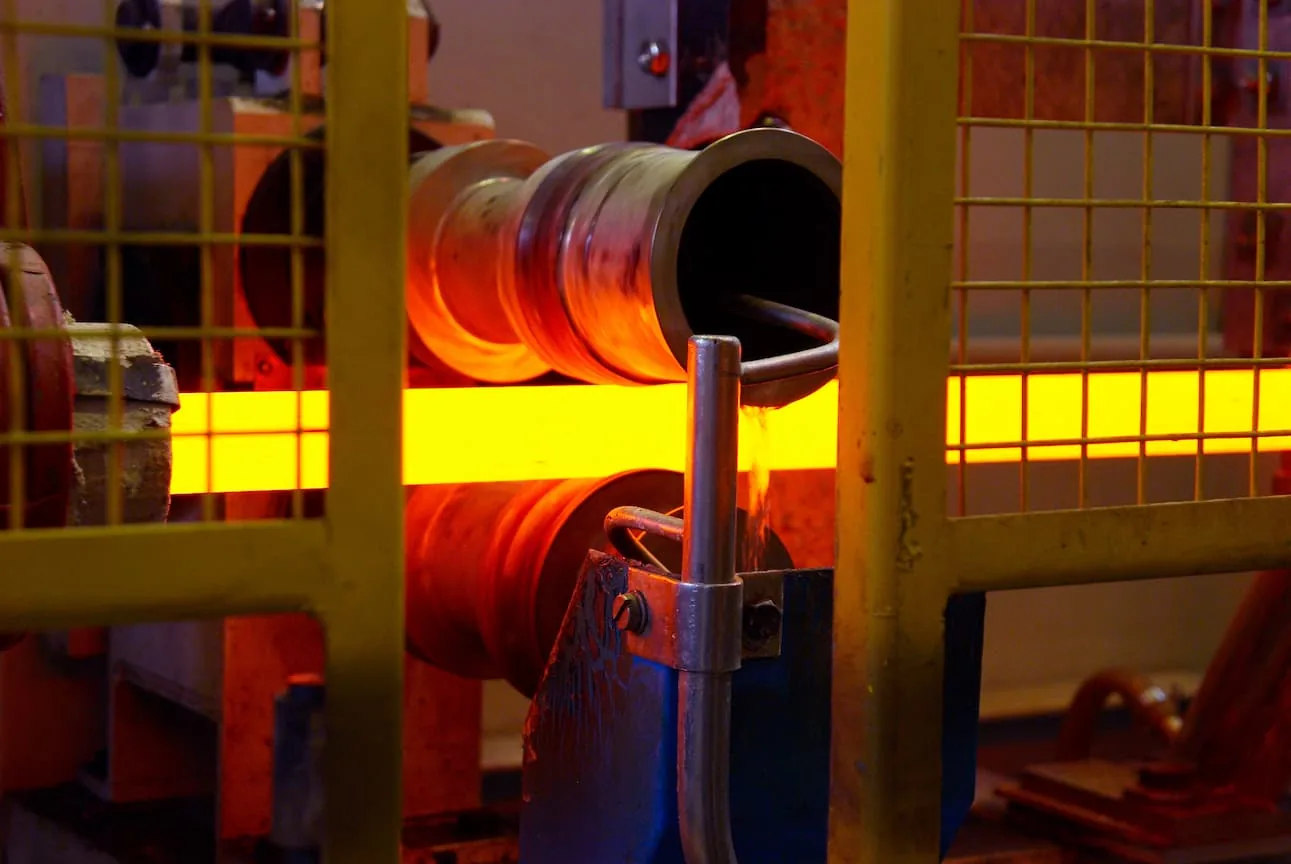
Oil country tubular goods are the pipe that goes down an oil well, and the United States has spent years fighting over how much of it to import. U.S. Steel just put $475 million behind making more of it in Alabama.
Key Takeaways
- U.S. Steel broke ground September 21, 2026 on a $475 million quench and tempering line at Fairfield Tubular Operations outside Birmingham, Alabama.
- Notably, the project carries roughly 250 permanent jobs, most of them union, plus about 600 construction jobs at peak, with work running through 2029.
- It is the largest project U.S. Steel has named in Alabama under the Nippon Steel investment plan, which pledges about $14 billion with $11 billion due by the end of 2028.
- However, the named projects total only about $5.1 billion so far, which is less than half the 2028 commitment.
- Meanwhile, domestic producers filed a new trade case in April 2026 against oil country tubular goods imports from Austria, Taiwan and the UAE.
What Oil Country Tubular Goods Actually Are
Generally, oil country tubular goods, usually shortened to OCTG, is the industry term for the steel pipe used to drill and complete a well. It covers drill pipe, casing that lines the hole, and tubing that carries product to the surface.
Importantly, the grade matters more than the tonnage. A well that runs thousands of feet deep puts enormous pressure and tension on the pipe. Therefore the steel has to be both hard and able to flex without fracturing. Consequently, producers heat treat it.
Quench and tempering is that heat treatment. You heat the steel, cool it rapidly, then reheat it at a lower temperature. In other words, the quench makes it hard and the temper takes the brittleness back out. Skip the second step and the pipe cracks in the ground, which is the most expensive place for it to fail.
The U.S. OCTG market is worth roughly $10 billion in 2026. Historically, a significant share of the heat treated product has arrived from overseas.
Why Fairfield, Alabama
Currently, Fairfield Tubular Operations sits just outside Birmingham, and U.S. Steel has said the modernized plant will supply the major producing basins: the Permian, Eagle Ford, Haynesville and Marcellus.
Notably, the $475 million line is not the only project at the site. In November 2025 the company committed $75 million to a premium thread line there, adding 44 permanent positions, 40 of them represented by the United Steelworkers. Together the 2 projects put $550 million into one plant.
Specifically, the line should create about 250 permanent jobs, mostly union, plus roughly 600 construction jobs at peak. U.S. Steel received its final air permit on September 15, initial construction began in July, and the board approved full funding in June.
The Nippon Scoreboard
In fact, here is where the story gets checkable. When Nippon Steel completed its acquisition in June 2025, it pledged approximately $14 billion of U.S. growth capital. Of that, $11 billion falls due by the end of 2028.
Importantly, that $14 billion figure is separate from the roughly $14.1 billion Nippon paid for the company. The 2 numbers are nearly identical and are frequently conflated, so the investment pledge is the one to track.
Helpfully, U.S. Steel publishes its own project list. As of now it names the following.
| Facility and project | Amount | Status |
|---|---|---|
| Mon Valley Works, PA: hot strip mill | $2.0B to $2.5B | Engineering |
| Big River Steel, AR: direct reduced iron | $1.9B | Engineering |
| Fairfield, AL: quench and tempering | $475M | Broke ground Sept 2026 |
| Gary Works, IN: blast furnace 14 reline | $350M | Underway, 2026 target |
| Gary Works, IN: hot strip mill and steel shop | $200M | Permits submitted |
| Mon Valley Works, PA: slag recycler | $100M | Construction begins 2026 |
| Fairfield, AL: premium thread line | $75M | Construction underway |
Source: U.S. Steel, Forging Our Future progress overview.
In total, those projects come to about $5.1 billion at the low end of the Mon Valley range. Therefore named projects account for roughly 46 percent of the $11 billion due by 2028. A much smaller slice has reached construction.
By contrast, the work actually in the ground today is the $350 million Gary reline, the $75 million Fairfield thread line, and now the $475 million quench and tempering build. That is about $900 million. Everything larger sits in engineering.
The Import Fight Is Still Live
Trade policy has not settled this market. In April 2026, a domestic producer filed new antidumping and countervailing duty petitions against oil country tubular goods imports from Austria, Taiwan and the United Arab Emirates. The petition alleges UAE dumping margins of 124 to 126 percent.
Furthermore, the U.S. International Trade Commission found a reasonable indication of material injury and voted in May 2026 to continue the investigations.
In short, that sequence is the point. Tariffs and duties can raise the landed cost of imported pipe, but they cannot create a heat treating line. Capacity is the only thing that replaces an import, and capacity takes until 2029.
What to Watch Next
Fairfield gives the first measurement of the Nippon commitment against concrete rather than a press release. Supporters argued the deal would bring real capital spending to American plants, and this is the test case.
Specifically, 3 markers will tell you whether the plan is tracking. First, whether the Mon Valley hot strip mill moves from engineering to construction, because it is roughly 40 percent of the named total by itself. Second, whether the undecided mini mill location gets named. Third, whether Fairfield holds its 2029 completion date.
Overall, this is the pattern the broader data has been showing. As we covered in the August durable goods report, primary metals orders rose 1.2 percent in August and are up 15.3 percent year to date. You can follow the project pipeline on our US Manufacturing Investment Tracker, and the full story runs in IndustrialSage Headlines Ep. 34.
Frequently Asked Questions
What are oil country tubular goods?
Oil country tubular goods, or OCTG, are the steel pipe products used to drill and complete oil and gas wells. The category covers drill pipe, casing and production tubing, and the U.S. market is worth roughly $10 billion in 2026.
What is quench and tempering?
Essentially, quench and tempering is a heat treatment that heats steel, cools it rapidly, then reheats it at a lower temperature. The quench adds hardness and the temper removes brittleness, which is what lets pipe survive a deep, high pressure well.
How much is U.S. Steel investing in Fairfield, Alabama?
Overall, the quench and tempering line is a $475 million project. In addition, the company committed $75 million to a separate premium thread line in November 2025, bringing the site total to $550 million.
How many jobs will the Fairfield project create?
In total, U.S. Steel expects roughly 250 permanent jobs, most of them union, plus about 600 construction jobs at peak. The premium thread line adds 44 permanent positions, 40 of them United Steelworkers represented.
How much of the Nippon Steel investment plan has been committed?
Overall, the pledge is approximately $14 billion, with $11 billion due by the end of 2028. However, named projects total about $5.1 billion, and only around $900 million is physically under construction.
Are oil country tubular goods imports still being challenged?
Yes. A domestic producer filed a new trade case in April 2026 against imports from Austria, Taiwan and the United Arab Emirates. The International Trade Commission voted in May 2026 to continue the investigations.

Author: Wes Garrett
Content and Growth Marketing Producer | From Strategy to Execution, Delivering Impactful Media Solutions and Client Success


