

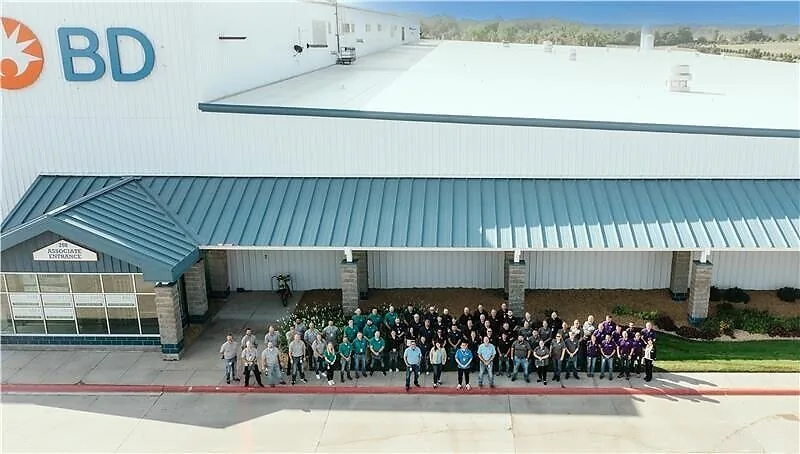
Becton Dickinson agreed to spend $19 billion in the United States in exchange for relief from future Section 232 medical device tariffs, becoming the first major device maker to trade capital for trade protection.
Key Takeaways
- BD announced the agreement on October 6, 2026. The commitment runs to about $19 billion in U.S. spending across several years.
- Notably, roughly $3 billion of that goes to expanding manufacturing sites the company already operates domestically.
- In addition, the expansion would add about 5 billion essential medical consumables a year to U.S. output, lifting BD’s domestic share toward 80 percent.
- Also, BD committed to making 100 percent of BD needles used in the United States domestically, from American-made steel.
- However, the relief applies to future Section 232 actions, subject to final scope and to milestones neither party has published.
- Meanwhile, Commerce has not published the medical device tariff rule. Until it does, BD says it cannot quantify what the agreement is worth.
- Finally, more than $1 billion goes to Nebraska, where BD has manufactured since 1949 and employs roughly 2,700 people.
What Section 232 Medical Device Tariffs Are
Section 232 of the Trade Expansion Act lets the president restrict imports after the Commerce Department finds they threaten national security. By contrast, Section 232 duties take longer to put in place and tend to outlast the administration that imposes them.
Commerce opened an investigation covering personal protective equipment, medical consumables and medical equipment in September 2025. Notably, its scope is broad, reaching from syringes, needles and scalpels through IV bags, catheters and gauze to pacemakers and insulin pumps.
Importantly, Commerce has not yet issued a final determination. The administration has said it will finalize the rule by year end 2026. Until then, every company in the sector negotiates against a tariff whose rate and product scope do not yet exist on paper.
Meanwhile, industry has spent the interval lobbying for exemptions. AdvaMed, the sector’s main trade association, argues that roughly 70 percent of medical equipment used in the United States is already made domestically.
What BD Committed To
BD makes the syringes, catheters, needles and laboratory equipment used in essentially every American hospital. Overall, its announcement splits into a near term piece and a much larger multi-year remainder.
| Commitment | Detail |
|---|---|
| Total U.S. investment | About $19 billion over several years |
| Manufacturing expansion | About $3 billion at existing U.S. sites |
| Added annual output | About 5 billion essential medical consumables |
| Resulting domestic share | About 80 percent of U.S. supply |
| Nebraska | More than $1 billion |
| Needles | 100 percent of BD needles used in the U.S., from American-made steel |
| Relief received | Future Section 232 tariffs on covered products and inputs |
Source: BD announcement and corroborating trade coverage, October 6, 2026.
The needle commitment deserves precision, because it is narrower than it first sounds. BD pledged that 100 percent of BD needles used in the United States will be made domestically from American steel. That covers its own product, not every needle sold in the country.
Even so, it is the most concrete and most checkable claim in the package. The dollar totals have no published schedule, no plant-by-plant breakdown and no job count attached.
Where the Money Lands
BD’s U.S. manufacturing network already spans Columbus and Broken Bow in Nebraska, Canaan in Connecticut, Añasco in Puerto Rico, Sandy in Utah, El Paso in Texas, Covington in Georgia, and Sumter in South Carolina. Nebraska is the piece the administration highlighted.
Importantly, Nebraska is not a new site. BD has manufactured in Columbus since 1949, where roughly 2,100 employees work across 3 locations and about 1 million square feet producing prefillable syringes. Likewise, the Broken Bow plant opened in 1960 and runs 310,000 square feet with nearly 600 employees. Combined, that is about 2,700 people, and the company marked 75 years of Nebraska manufacturing in 2024.
Therefore this is expansion of an established footprint rather than reshoring. That distinction matters when evaluating how quickly the capacity arrives, because adding lines inside a qualified facility is faster than qualifying a new one.
What BD Gets, and What It Does Not
Read the relief language carefully. Specifically, BD receives relief from future Section 232 tariffs on covered products and inputs, subject to the final scope and implementation of any future action and to BD achieving agreed milestones.
Notably, three conditions sit inside that sentence. To begin with, the tariffs are future rather than existing. In addition, the scope is not final. Lastly, neither party has published the milestones.
As a result, BD has declined to quantify the financial benefit, saying it cannot calculate the impact until Commerce publishes the rate. An agreement the signing company cannot yet value is a different instrument than a tariff exemption.
Why This Matters Beyond BD
The mechanism is the story. Pharmaceutical companies negotiated against the Section 232 pharmaceutical tariff we covered in August, and medical devices are now working the same instrument. BD is the first major device maker through that door.
Consequently, every competitor in the sector now has a published template. The trade is domestic capital commitments in exchange for conditional relief, negotiated before the rule exists rather than litigated after it lands.
Generally, markets read it as reducing uncertainty rather than as a windfall. BD shares rose about 2.4 percent around the announcement. Jefferies analyst Mathew Taylor framed tariff clarity, or levies proving less bad than feared, as a potential clearing event for medtech.
What Manufacturers Should Watch
Three dates and details are worth tracking through the end of 2026.
The published rule. Until Commerce issues a final determination, nobody knows the rate or the covered product list. Ultimately, that document converts every one of these agreements from a framework into a number.
The milestones. BD’s relief depends on targets the parties have not disclosed. Whether those milestones become public, and whether they carry clawbacks, determines how binding the $19 billion actually is.
The steel sourcing. Finally, an all-domestic needle supply chain built on American-made steel creates real demand for a specific grade of stainless. Suppliers to that chain should expect qualification activity well before the capacity shows up.
The full breakdown runs in IndustrialSage Headlines Ep. 35. We track announcements like this one, including the commitments behind them, on our US Manufacturing Investment Tracker.
Frequently Asked Questions
What are Section 232 medical device tariffs?
They are import duties the president may impose on medical devices and consumables after a Commerce Department national security finding. Commerce opened the investigation in September 2025, covering products from syringes and gauze to pacemakers. Commerce has not published a final rule.
What did Becton Dickinson agree to?
BD committed about $19 billion in U.S. spending over several years, including roughly $3 billion to expand existing domestic manufacturing sites, in exchange for relief from future Section 232 tariffs on covered products and inputs.
Is BD exempt from tariffs now?
No. Instead, the relief applies to future Section 232 actions, subject to final scope and to milestones neither party has published. BD says it cannot quantify the benefit until Commerce issues the tariff rate.
Will all needles sold in the U.S. be made domestically?
No. BD committed to manufacturing 100 percent of BD needles used in the United States domestically, from American-made steel. Therefore, that applies to BD’s own products rather than to all needles sold in the country.
How much is going to Nebraska?
More than $1 billion. Altogether, BD has manufactured in Columbus, Nebraska since 1949 and in Broken Bow since 1960, employing roughly 2,700 people across its Nebraska operations.
Why does this deal matter to other manufacturers?
BD is the first major medical device company to trade domestic investment for conditional Section 232 relief, following similar pharmaceutical agreements. As a result, the structure gives the rest of the sector a template to negotiate against before the rule is final.

Author: Wes Garrett
Content and Growth Marketing Producer | From Strategy to Execution, Delivering Impactful Media Solutions and Client Success


