

$1.595 trillion in manufacturing investment has been committed. Net factory jobs since January 2025 are down 82,000. Both of those things are true.
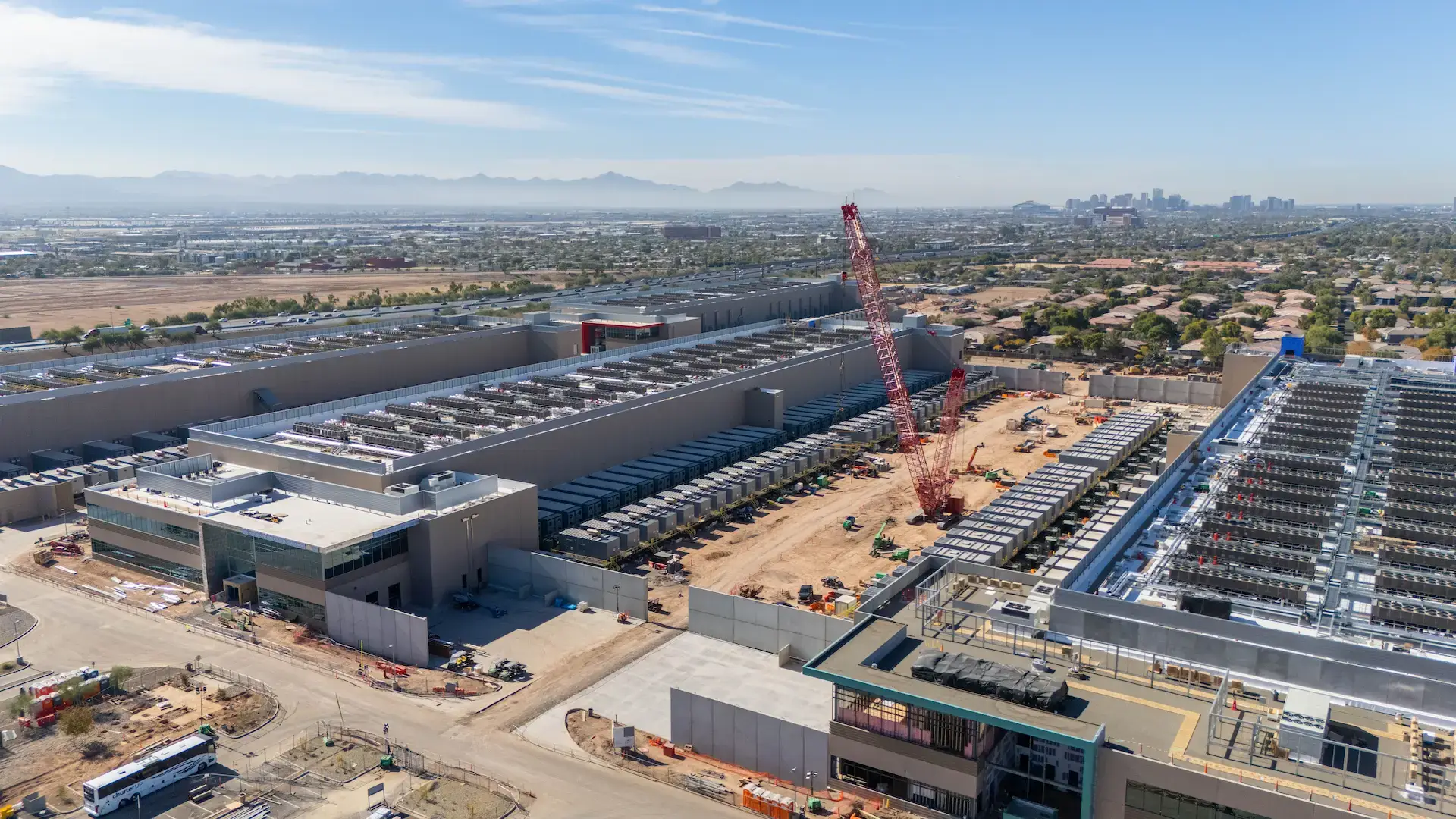
The cranes are up. In Chandler, Arizona, TSMC is pouring concrete on what will be the most advanced semiconductor fabrication facility on American soil. Over in Clay, New York, Micron is breaking ground on a $200 billion memory chip complex that will take the better part of a decade to fully staff. And in Georgia, Hyundai’s Metaplant has started rolling electric vehicles off the line. These are real projects with real steel in the ground.
Yet, if you pull up the Bureau of Labor Statistics data this morning, you’ll find the US had roughly 12.69 million manufacturing workers in early 2026. That’s about 82,000 fewer than January 2025. The investment numbers are historic. The employment trend is going the wrong direction. Both are true at the same time.
Most coverage picks one of those facts and runs with it. Either the investment numbers are proof that American manufacturing is back, or the job losses are proof that it’s all talk. We’ve been tracking this buildout closely enough to know that neither framing is honest. The real story is about time, and almost nobody is explaining it.
The Money Is Real. Here’s the Proof.
Before getting into the gap, let’s be clear about what’s actually happening on the ground. Manufacturing construction spending hit $743.8 billion in 2024, up 5.3% from $706 billion in 2023. That’s not a press release. That’s the Census Bureau counting concrete poured and steel erected.
For context: manufacturing construction spending has nearly doubled since 2021. That kind of trajectory doesn’t happen because companies are feeling optimistic. It happens because shovels are in the dirt.
TSMC’s Arizona project alone represents $165 billion in committed investment and 12,000 direct jobs at full build-out. Micron’s $200 billion New York megafab is breaking ground now. These aren’t concept renderings. They’re active construction sites in American ZIP codes.
Where the $1.595 Trillion Is Going
The investment is spread across sectors and states in ways that don’t fit neatly into a single narrative.
Semiconductors are the biggest piece. The Semiconductor Industry Association has tracked $640 billion-plus in commitments across 140-plus projects in 30 states. Pharma is a close second in terms of recent momentum: more than $370 billion in 2025 pledges alone, led by Johnson & Johnson ($55B), Eli Lilly ($27B), and Novartis ($23B). Clean energy investment has gone from $2.5 billion per quarter in Q3 2022 to $14 billion in Q1 2025, per the Rhodium Group. Automotive and EV manufacturing is projected to hit $312 billion, with Hyundai’s $7.6 billion Metaplant in Georgia as one of the most visible examples.
We’ve been tracking every major commitment at the IndustrialSage US Manufacturing Investment Tracker. Worth bookmarking if you work in this space.
So Why Are Manufacturing Jobs Down?
Here’s where the coverage falls apart. Consistently.
BLS data shows 12.69 million manufacturing workers as of early 2026, down roughly 82,000 net since January 2025. Reporters see that number, then look at the investment figures, and either conclude the announcements are hollow or ignore the employment data entirely. Neither response reflects how factories actually get built.
Announced jobs and BLS employment are two completely different metrics. Announced jobs are forward commitments tied to projects with timelines measured in years, sometimes decades. When a company says “we will create 10,000 jobs,” they mean over the life of a phased construction project that may not reach full staffing until 2030 or later. The BLS counts people who showed up to work in a factory last month.
The “364,000 jobs announced” headline from 2022 did not mean 364,000 people started working in factories in 2022. It meant companies said they planned to hire 364,000 people over multi-year project timelines. That distinction should have been in every story. It wasn’t.
The Reshoring Initiative’s 2024 data makes the lag visible: roughly 2 million jobs have been announced since 2010, and about 1.7 million have been filled. That 300,000 gap isn’t failure. It’s the pipeline. Projects announced in years one through three are filling jobs in years five through ten.
The Timeline Nobody Publishes
Walk through TSMC Arizona and the math becomes hard to argue with.
The project was announced in 2020. Groundbreaking happened in 2021. First fab construction wrapped in 2024-2025. Volume production is coming online in 2025-2026. Full staffing across all planned facilities? 2029 and beyond. That’s a nine-year arc from announcement to full employment. Publishing the job number in 2022 without that timeline attached was not journalism. It was a press release with a byline.
Intel Ohio is the harder version of this story. Announced in 2022, the project has now been pushed to 2030-2031. Communities in Licking County built economic plans around a hiring timeline that moved by nearly a decade. That’s a real cost. But it also doesn’t mean reshoring is failing. Semiconductor fabs are among the most complex built environments in human history. Delays are part of the process.
Pharma is similar. From commitment to first production hire, the validation process typically runs five to seven years. A $55 billion J&J manufacturing pledge made in 2025 will show up in factory employment data around 2030, at the earliest.
This isn’t a scandal. It’s how factories work. The scandal is that nobody explains it.
What IS Moving Right Now
The jobs aren’t here yet in the numbers that match the investment. But some things are already moving.
Wages. The IndustryWeek 2025 Salary Survey puts average annual manufacturing compensation at $135,525, up 13.1% from 2024. Average hourly wages hit $29.95 in March 2026. The jobs that exist are paying more than they ever have.
Quality is shifting too. The Reshoring Initiative classified 88% of reshored jobs in 2024 as high-tech or medium-high-tech. This isn’t the return of assembly-line work from 1975. The jobs coming online require engineering credentials, advanced certifications, and technical training programs that many regions are scrambling to build.
Tariffs are accelerating the pipeline. Reshoring Initiative data shows tariff citations as a reshoring driver jumped 454% in Q1 2025 versus Q1 2024. Companies that were evaluating moves are now making them. That will show in employment data, just not this quarter.
One more thing the BLS numbers don’t capture: construction employment is booming as a direct result of this buildout. The crews building these fabs, the electricians running conduit through a 500,000-square-foot clean room, the ironworkers on the Micron site in upstate New York. Those are manufacturing-adjacent jobs. Real wages, real work, real communities benefiting. They just don’t show up in the manufacturing employment series.
Announced vs. Reality: US Manufacturing Investment 2026
| Metric | The Headline Number | What It Actually Means |
|---|---|---|
| $1.595 trillion in investment commitments | Total private-sector announced commitments (ISG Tracker, Apr 2026) | Includes projects 1-10 years from completion |
| 244,000 jobs announced in 2024 | Reshoring Initiative job announcements | Forward commitments, not current hires |
| 12.69 million manufacturing workers | BLS actual employment, early 2026 | Real people working in factories today |
| Net jobs since Jan 2025: -82,000 | BLS net change | Reflects current economy, not future buildout |
| $135,525 avg annual manufacturing salary | IndustryWeek 2025 Survey | Up 13.1% from 2024; wages leading headcount |
| $743.8B construction spending in 2024 | Census Bureau | Factories being built right now |
The factories are being built. The numbers above aren’t in conflict. They’re measuring different things at different points on the same timeline.
What’s actually happening in 2026 is the awkward middle: the investment is committed, the construction is real, and the employment wave hasn’t arrived yet. That’s not a disappointment. That’s Tuesday when you’re building a semiconductor fab. The lag between groundbreaking and first hire isn’t a news story. It’s just physics.
The jobs tied to this investment will show up in BLS data. They’ll show up in 2028, 2029, 2030, and into the 2030s. When they do, they’ll be higher-skill and higher-wage than the manufacturing jobs they’re replacing. Whether the regions and training pipelines are ready to fill them is a different question entirely, and probably the more important one. Keep an eye on the IndustrialSage US Manufacturing Investment Tracker as those projects move from commitment to construction to hiring.
FAQ
How much has the US invested in manufacturing reshoring in 2026?
As of April 2026, total committed private-sector manufacturing investment stands at $1.595 trillion, according to the IndustrialSage US Manufacturing Investment Tracker. This includes announced commitments across semiconductors, pharmaceuticals, clean energy, and automotive manufacturing. Many projects span multi-year build timelines and have not yet reached full employment.
Why are manufacturing jobs declining if investment is at record highs?
Announced investment commitments and BLS manufacturing employment measure different things. Investment is a forward pledge tied to projects that take five to ten or more years to reach full staffing. BLS data counts workers currently employed in factories. Net manufacturing employment is down roughly 82,000 since January 2025 due to current economic conditions, while the investment committed today will produce jobs over the next several years as facilities complete construction and begin production.
When will reshoring investments actually create jobs?
Timelines vary by sector. Semiconductor fabs like TSMC Arizona typically run eight to ten years from announcement to full staffing. Pharmaceutical facilities require five to seven years of validation before production hiring begins. Automotive and clean energy plants move faster, often hiring within two to four years of groundbreaking. The bulk of job creation tied to current commitments is projected between 2027 and 2032.
Which sectors are driving US manufacturing investment in 2026?
Semiconductors lead with more than $640 billion committed across 140-plus projects in 30 states. Pharmaceuticals have seen over $370 billion in 2025 pledges from Johnson & Johnson, Eli Lilly, and Novartis. EV and automotive manufacturing is tracking toward $312 billion, and clean energy manufacturing investment has quintupled on a quarterly basis since 2022.
Where can I track US manufacturing investment announcements?
The IndustrialSage US Manufacturing Investment Tracker compiles major private-sector manufacturing commitments across sectors and states. Additional sources include the Reshoring Initiative’s annual reports, the Semiconductor Industry Association, and BLS via FRED for ongoing employment data.
Data compiled April 2026. Some figures reflect the most recently published annual reports. Compiled by Wes Garrett, Content Producer, IndustrialSage.

Author: Wes Garrett
Content and Growth Marketing Producer | From Strategy to Execution, Delivering Impactful Media Solutions and Client Success

