

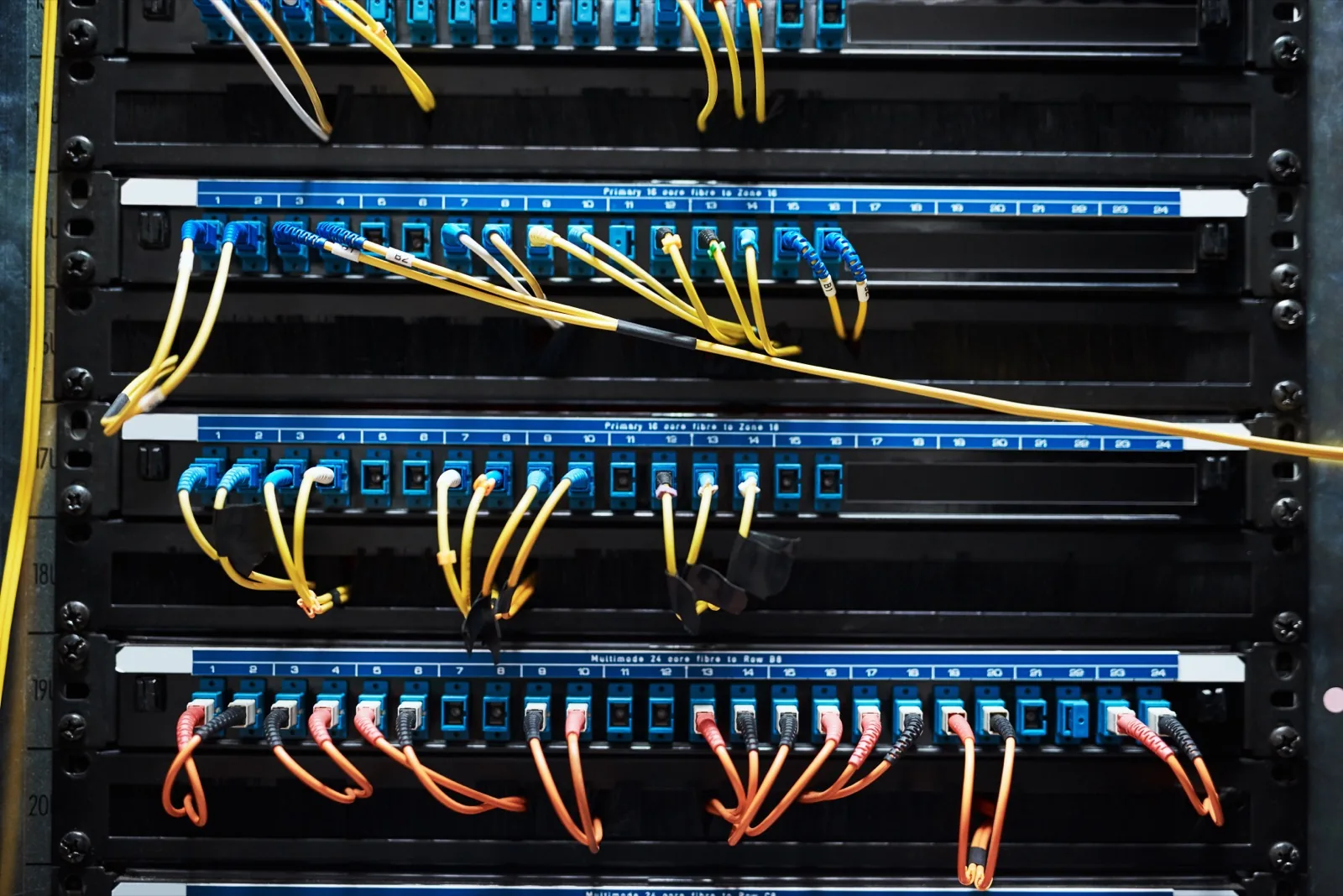
The Marvell Lumentum acquisition is the largest technology deal of 2026, and it is about cables rather than chips. More precisely, it is about the lasers that have replaced copper inside an AI data center.
Key Takeaways
- Marvell agreed on November 2, 2026 to acquire Lumentum in an all stock transaction, approved unanimously by both boards.
- The implied enterprise value is $115 billion including debt. Equity value is roughly $102.5 billion.
- Specifically, Lumentum holders receive 4.500 Marvell shares per share, about $1,132, a 23.9 percent premium to the October 28 unaffected close.
- Consequently, Lumentum shareholders would own approximately 33 percent of the combined company on a fully diluted basis.
- Marvell projects a $550 billion addressable market and more than $1 billion in annual run rate cost synergies. Both figures are company estimates.
- Notably, the deal is not expected to close until the first half of 2028, pending shareholder and regulatory approval.
- Markets reacted badly. Marvell shares fell more than 10 percent and Lumentum fell more than 18 percent after the announcement.
- Also, Marvell sells components to transceiver makers who compete directly with Lumentum, which creates an immediate channel conflict.
Marvell builds the electrical side of data center connectivity: custom compute silicon, switching and the digital signal processors inside optical modules. Lumentum builds the optical side: indium phosphide lasers, optical transceivers and optical circuit switching. Putting them together produces a single supplier for the full path a bit travels between 2 accelerators. That is the pitch, and on the technology it is a coherent one.
AI infrastructure is undergoing a fundamental architectural shift toward optical connectivity.
Matt Murphy, Chairman and Chief Executive Officer, Marvell
The terms of the Marvell Lumentum acquisition
The headline number requires one clarification that most coverage skipped. $115 billion is enterprise value, which includes debt. Equity value is about $102.5 billion. The distinction matters. The equity figure is what makes this the largest deal of 2026 and, on Bloomberg’s measure, the largest ever in global technology excluding the SpaceX and xAI merger.
| Term | Detail |
|---|---|
| Structure | All stock |
| Enterprise value | $115 billion, including debt |
| Equity value | Approximately $102.5 billion |
| Exchange ratio | 4.500 Marvell shares per Lumentum share |
| Implied per share value | About $1,132 |
| Premium | 23.9 percent to the October 28, 2026 unaffected close |
| Ownership split | Marvell holders 67 percent, Lumentum holders 33 percent |
| Expected close | First half of calendar 2028 |
Both boards have settled leadership on paper. Matt Murphy continues as chairman and chief executive of the combined company. Lumentum chief executive Michael Hurlston joins the Marvell board along with 2 other Lumentum directors.
Why the market disliked it
Marvell shares fell more than 10 percent on the announcement, and Lumentum fell more than 18 percent. A target falling that hard on an all stock deal is unusual, and it reflects the exchange ratio. Lumentum holders are paid in Marvell stock, so when Marvell drops, the implied consideration drops with it. Therefore the 23.9 percent premium quoted against the October 28 close is a snapshot rather than a guaranteed outcome.
The channel conflict inside the Marvell Lumentum acquisition
This is the part that touches anyone who buys optical modules, and it is the reason the deal is more complicated than the technology story suggests.
Notably, Marvell is a merchant silicon supplier. It sells DSPs and related components to the transceiver manufacturers who assemble finished optical modules. Several of those customers compete directly with Lumentum. Once this closes, a meaningful share of Marvell’s customer list would be buying critical components from a company that also owns their largest rival.
Merchant suppliers who acquire their way into their customers’ markets historically lose some of those customers, whether or not they intend to. The purchasing logic is simple: a transceiver maker that depends on Marvell silicon now has a sound commercial reason to qualify a second source. Analysts raised this within days. One framed the move as Marvell shifting from a fabless merchant silicon provider into a vertically integrated connectivity platform. That is accurate, and vertical integration is precisely what a merchant customer base tends to resist.
What a buyer should do between now and 2028
In practice, the close date does most of the work here. A deal that does not complete until the first half of 2028 leaves roughly 18 months of regulatory review. During that period both companies operate independently, and neither can coordinate pricing, roadmaps or supply allocation. In practice that means nothing changes commercially in the near term, and it also means the uncertainty lasts a long time.
Three things are worth doing in that window. First, if you buy optical modules, map which of your suppliers depend on Marvell silicon. Their second sourcing decisions will shape your 2028 availability more than this deal will. Second, write change of control language into agreements signed during the review period. Third, treat the $550 billion addressable market and the $1 billion synergy target as company projections rather than independent estimates, since both come from the deal presentation.
We applied the same framework when Schneider Electric acquired PTC, and the questions a buyer should ask are nearly identical.
Why optical interconnect is suddenly worth $115 billion
Copper runs out of reach before it runs out of speed. As accelerator counts per cluster grow, the distance between chips exceeds what an electrical trace can carry at the required data rate. Therefore the connection goes optical much closer to the processor than it used to. The Marvell Lumentum acquisition puts a $115 billion price on that shift. Each one of those links needs a laser, a modulator, a receiver and the silicon to drive them.
This was not Marvell’s first move in that direction. It acquired Inphi for $10 billion in 2021 and completed a $3.5 billion acquisition of photonics company Celestial AI in February 2026. Lumentum extends the same thesis to the light source itself. Furthermore, indium phosphide laser capacity has been a genuine industry bottleneck, and owning it is strategically different from buying it.
Still, the scale of the price implies a demand curve that holds for a decade. That is a long forecast in a market where the customer list is short and concentrated. The semiconductor equipment chain has been absorbing similar bets, as we covered in the semiconductor equipment research arms race. Meanwhile the physical constraints on data center construction remain unresolved, as switchgear lead times continue to demonstrate.
Frequently asked questions
How much is the Marvell Lumentum acquisition worth?
The implied enterprise value is $115 billion including debt, and the equity value is roughly $102.5 billion. On the equity measure it is the largest technology deal of 2026.
What do Lumentum shareholders receive?
4.500 shares of Marvell common stock for each Lumentum share, worth about $1,132 per share at announcement. That represented a 23.9 percent premium to Lumentum’s unaffected closing price on October 28, 2026.
When will the Marvell Lumentum acquisition close?
Marvell expects it to close in the first half of calendar 2028, subject to Lumentum shareholder approval, regulatory clearances and other customary conditions. Until then, both companies operate independently.
What does Lumentum actually make?
Lasers, optical transceivers and optical circuit switching. These components move data between processors using light instead of copper. Consequently they have become a constraint in AI data center buildouts.
Why did both stocks fall after the announcement?
Marvell fell more than 10 percent and Lumentum fell more than 18 percent. Because the deal is all stock with a fixed exchange ratio, a decline in Marvell’s price directly reduces what Lumentum holders receive. Investors also flagged the conflict with Marvell’s existing merchant silicon customers.
Does the deal create a conflict with Marvell’s customers?
Yes, and analysts raised it immediately. Marvell sells components to transceiver manufacturers who compete with Lumentum. After closing, those customers would be buying critical silicon from the owner of their largest competitor, which gives them a reason to qualify alternative suppliers.
Track the capital
AI infrastructure keeps pulling capital into physical manufacturing. Follow the running total in our US Manufacturing Investment Tracker. Then see the full lineup in IndustrialSage Headlines Episode 37, and keep up with daily reporting in our manufacturing news section.
Primary sources: Marvell’s announcement and Lumentum’s Form 8-K filing.

Author: Wes Garrett
Content and Growth Marketing Producer | From Strategy to Execution, Delivering Impactful Media Solutions and Client Success


